Whistleblowing Procedure


Whistleblowing Procedure
REA is committed to maintaining the highest standards of integrity, transparency, and ethical business conduct across all its operations. To uphold accountability and foster a safe and responsible environment, REA provides a whistleblowing procedure for all stakeholders, both internal and external, to report any suspected violations, fraud, misconduct, or unethical behaviour.
REA takes seriously any complaints and concerns from any individual or stakeholder, including employees, communities, suppliers, and external parties.
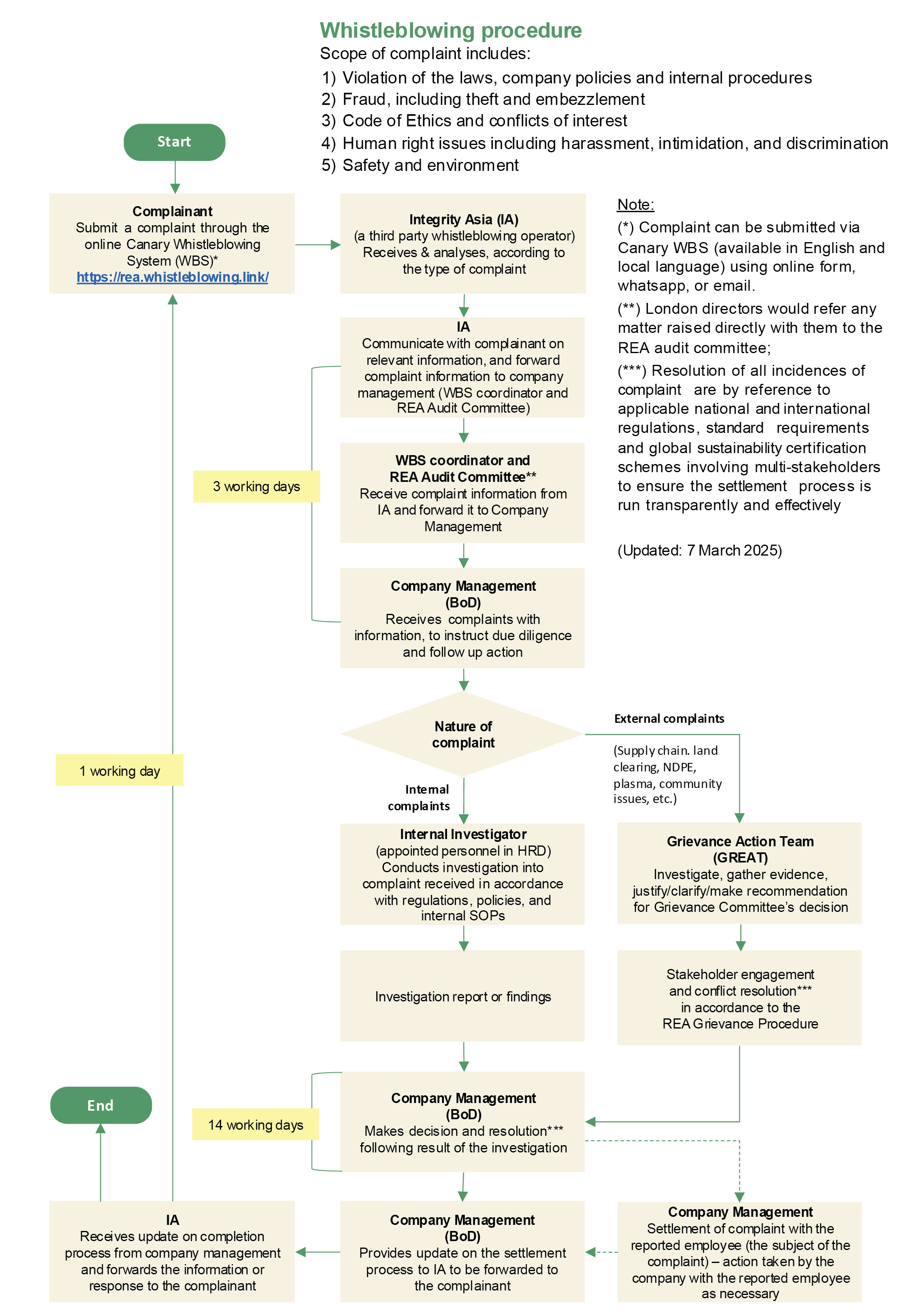
A complaint refers to any concern raised by an individual or organisation regarding REA’s operations, business practices, or supply chain in relation to any violation against the national regulations, sustainability standards, and/or REA’s policies. Each complaint is reviewed to determine if it falls under whistleblowing (serious misconduct by employees) or grievance (operational, supply chain, or a sustainability-related issue). Evidenced violations are escalated through the formal procedures for further investigation to ensure a fair and transparent resolution process.
All reports submitted through this system will be handled confidentially and monitored by an independent body to ensure fairness, impartiality, and appropriate follow-up actions.
Whistleblowers have the option to remain anonymous, and all reports will be treated with the utmost discretion. No personal information will be revealed without the whistleblower’s consent unless required by law to conduct a thorough investigation.
The whistleblowing procedures are for reporting unethical, illegal, or improper activities within the company that could harm individuals, the organisation, stakeholder’s interest, or the environment.
REA encourages stakeholders to report concerns, including but not limited to:
- Fraud, illicit, or corrupt practices
- Violations of company policies
- Conflicts of interest
- Misconduct or unsafe work practices
- Misuse of company assets
- Human rights matters, including workplace harassment, sexual harassment, discrimination, or intimidation
- Environmental, health, and safety violations
- Misuse of confidential information
The Audit Committee reviews and oversees whistleblowing matters to ensure:
- Due diligence and investigations:
Ensuring due diligence is conducted through impartial enquiries, evidence gathering and review, to achieve unbiased and just resolutions. - Appropriate follow-up actions:
The necessary steps are taken based on the findings to ensure accountability. - Integrity and confidentiality:
Safeguarding of sensitive information and ensuring the processes are handled with integrity. - Objectivity, impartiality, and fairness:
Ensuring all parties involved receive fair and unbiased treatment. - Proper response to whistleblowing cases:
Ensuring directors and management understand how to respond if a whistleblowing issue is raised directly with them, and identifying any necessary support or training for effective handling of any such cases.
Whistleblowing complaints are addressed on a case-by-case basis but also analysed collectively to identify trends, recurring risks, and potential systemic weaknesses. This approach allows the group to address root causes, refine policies and implement preventive measures.
REA believes that ethical business practices start from within. To promote an open and transparent culture:
- Employees are encouraged to raise concerns through existing internal channels, as detailed below under “How to Report.”
- The human resource department is responsible for ensuring that employees are well-informed of the whistleblowing procedures by:
- Briefings at new employee onboarding sessions
- Annual refresher briefings via each business unit
- Awareness campaigns e.g. banners, posters, WhatsApp communications
- Dedicated personnel to guide and support employees by HR in the business operations
Whistleblowing should be a last resort. REA aims to create an environment where employees are comfortable reporting concerns openly and without fear of reprisal.
REA has a zero-tolerance policy for retaliation against employees who raise concerns or participate in investigations. Any act of retaliation, such as threats, intimidation, or discrimination, will lead to disciplinary measures, potentially resulting in termination of employment.